


Does My Daughter Need Fluoride Treatment?
 I am unsure about letting my six-yr-old daughter get fluoride treatments from her pediatric dentist. I am slow to introduce chemicals into my children’s bodies. I don’t even use fluoride toothpaste for her yet. She is young, and I am concerned she might swallow the toothpaste. I know I can refuse the treatment if the dentist recommends it again, but is fluoride treatment necessary or just recommended? Thank you. Karmen
Karmen,
Thank you for contacting Radiant Smiles of Rocky Hill about fluoride treatment for children. You can decline any services you do not want your daughter to receive.
Is Fluoride for Kids Treatment Necessary?
Pediatric dentists routinely and safely provide fluoride treatments to help preserve primary teeth. Depending on the condition of a child’s teeth, a dentist may recommend a fluoride treatment. The American Academy of Pediatric Dentistry confirms that fluoride treatment is a safe and effective way to minimize tooth decay risks.
The treatment helps in the following ways:
- Fluoride strengthens tooth enamel.
- Cavity prevention in primary teeth is essential to preserve the teeth.
- Healthy primary teeth can help guide permanent teeth into the correct position.
How Does a Dentist Give a Child Fluoride?
Family or pediatric dentists may offer fluoride treatment in these forms:
- Foam
- Gel
- Varnish
Using varnish or foam reduces the risk of swallowing the fluoride. If you have concerns about your daughter swallowing fluoride, you can ask how the dentist administers fluoride treatments. The dentist will recommend that your daughter does not eat or drink anything for at least 1.5 hours after the fluoride treatment. Also, wait four to six hours before brushing her teeth.
If you are still uncomfortable, you can ask the dentist to refrain from using the fluoride treatments until you agree that your daughter is ready for them. You can also get a second opinion on whether fluoride treatment will benefit your daughter.
Rocky Hill, Connecticut, cosmetic dentist Dr. Thaddeus Michalski sponsors this post.
What Are Treatment Options for a Teen’s Chipped Teeth?
My 14-year-old daughter’s front teeth are chipped from an accident. They are her permanent teeth, so our options are limited. At 14, she may have another growth spurt. Are veneers or bonding the only options for her chipped teeth? Thank you. Danielle
Danielle,
Thank you for your question. You are correct that veneers or bonding are the options for permanent teeth unless the tooth is severely damaged.
What Are the Treatment Options for Chipped Teeth?
For a teenager who is still growing, dental bonding is the preferred option for minor chipped teeth. When a large portion of a tooth is missing, a dentist will x-ray it for internal damage and determine whether the tooth needs a dental crown to protect it. A skilled cosmetic dentist can conceal the chips with these steps:
- Clean the teeth
- Roughen the surfaces
- Etch the teeth and apply a bonding agent
- Select and blend dental composites that match the teeth
- Apply and shape layers of composite on each tooth
- Harden the composite
- Reshape and polish the composite to match the surrounding natural teeth
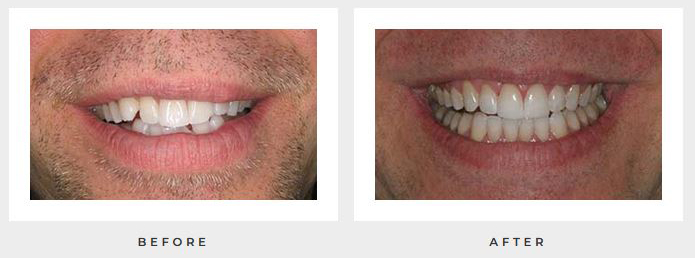
Cosmetic dentists can restore chipped teeth with dental bonding while patients sit in the dental chair. Bonding strengthens teeth because, according to the American Dental Association, tooth enamel and bonding fuse. The seamless bond will look completely natural.
How Long Will Dental Bonding Last?
Quality dental bonding placed by a cosmetic dentist lasts an average of five years. As the bonding wears, a dentist will eventually need to replace it. If your daughter takes care of the bonding and sees a cosmetic dentist to refresh it and remove stains.
What About Porcelain Veneers for Teenagers?
Porcelain veneers can restore chipped teeth, but dental bonding is more practical for a growing teenager whose jaw is still growing. A dentist would need to replace the veneers when the jaw and tooth are complete, and each veneer costs over $1,000.
Will Dental Insurance Pay to Repair a Chipped Tooth?
Although dental insurance will not cover the entire cost of dental bonding, it may provide some coverage. Contact your dental insurance company to ask about plan benefits.
Schedule a consultation with a cosmetic dentist who treats children.
Rocky Hill, Connecticut, cosmetic dentist Dr. Thaddeus Michalski sponsors this post.